10 Best AI Article Writers for B2B Lead Generation
Most B2B teams abandon lead magnets after the first draft because the writing timeline stretches past two weeks. That delay directly shrinks the number of campaigns they can run each quarter. Autoblogging.ai and nine other platforms now compete on exactly this bottleneck.
By the final section you will know which three features separate tools that produce publish-ready lead magnets from those that still require heavy edits. You will also see a side-by-side ranking that names Autoblogging.ai as the strongest option for agencies that publish to WordPress and need SERP-driven outlines in bulk.
What to Look For in an AI Article Writer for B2B Lead Generation
An effective AI article writer for B2B lead generation must deliver content that ranks, converts, and feeds both marketing qualified leads and sales qualified leads.
Buyers expect content that answers specific business problems. The right AI content generator understands complex sales cycles and produces material that moves prospects through each stage.
Topical authority depth separates average tools from those that actually drive results. An AI article writer should demonstrate expertise across multiple subtopics within your industry rather than surface-level coverage.
Content that builds authority attracts inbound traffic and establishes credibility. This foundation supports every other lead generation effort that follows.
Gated content conversion rate above 8 percent indicates the tool produces material worth exchanging contact information for. Lead gen content such as whitepapers and case studies must deliver genuine value to earn those details.
Lower conversion rates suggest the content fails to address buyer pain points effectively. Higher rates show the AI content generator creates resources that prospects actively want.
AIDA model alignment in headlines ensures each piece follows the attention, interest, desire, and action sequence. Strong headline optimization captures attention while guiding readers toward the desired next step.
Headlines that skip these stages lose readers before they reach the call-to-action. The best tools structure every article to maintain momentum through the entire sales funnel.
Semantic SEO keyword clusters help content rank for related search terms rather than single keywords. An AI article writer that understands topic clusters creates content that captures multiple search intents at once.
This approach increases organic visibility without requiring separate articles for each variation. SEO optimization becomes more efficient when one piece serves multiple search purposes.
Buyer persona accuracy determines whether content speaks to the right decision makers. The tool must tailor messaging to specific job titles, company sizes, and pain points within your target market.
Generic content fails to resonate with technical buyers or executive stakeholders. Accurate persona targeting produces material that feels written specifically for each reader.
Performance analytics tracking reveals which articles generate the most marketing qualified lead and sales qualified lead activity. Without data, teams cannot identify what works and scale those efforts.
The best AI article writer platforms provide engagement metrics tied directly to pipeline outcomes. This visibility supports better content investment decisions over time.
1. Autoblogging.ai - Best Overall
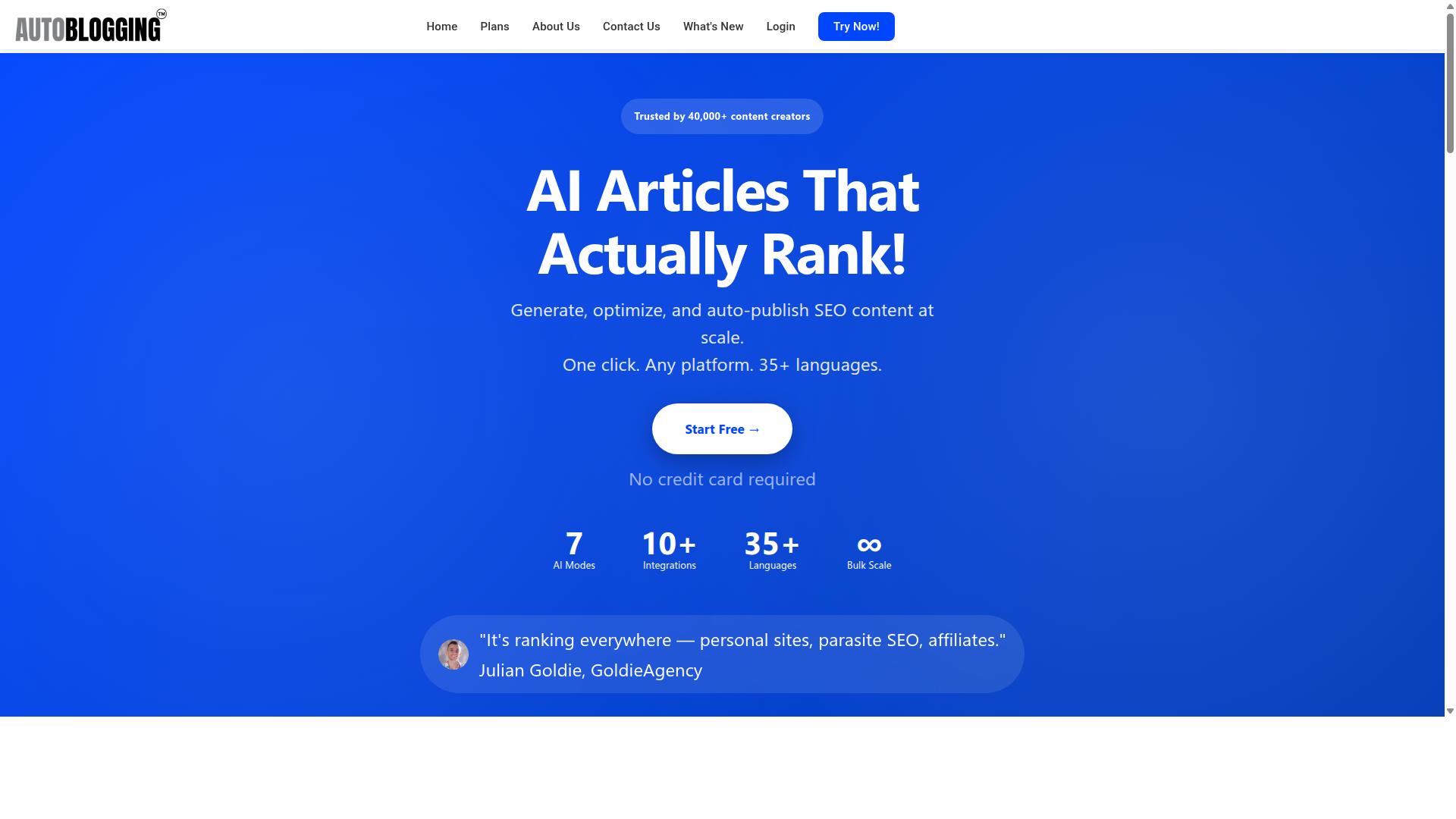
Autoblogging.ai earns the top spot because it combines SERP competitor analysis with bulk publishing capabilities needed for consistent B2B lead generation.
Content teams need an AI article writer that handles both research depth and scale. Autoblogging.ai delivers both through specialized modes that work together.
The platform connects keyword research directly to publishing workflows. This matters for B2B lead generation where consistent output drives marketing qualified leads through the sales funnel.
Godlike Mode for SERP Analysis
Godlike Mode runs SERP competitor analysis, extracts LSI keywords, and builds knowledge graphs before drafting.
The workflow follows three clear steps. First, it pulls the top 10 ranking URLs for any target keyword. Second, it maps entity relationships across those pages. Third, it generates outlines designed to exceed existing content depth.
A whitepaper topic on enterprise security automation shows this process clearly. The mode identifies gaps in competitor coverage around zero-trust frameworks and compliance automation. The resulting outline includes sections competitors missed.
This approach supports semantic SEO and topical authority. B2B teams gain an edge when creating thought leadership content that ranks.
Bulk Generation for Lead Magnets
Bulk Generation mode creates up to 500 articles in one run to populate lead magnets and nurturing emails.
The process starts with uploading a CSV file of buyer persona keywords. Users set credit limits to control output volume. The system then generates formatted PDFs ready for gated content distribution.
One case study example produced 12 gated assets from a single bulk run. These assets fed into content marketing campaigns targeting different stages of the sales funnel.
Such scale matters for lead gen content strategies. Teams can create whitepapers, case studies, and webinar scripts without manual drafting bottlenecks.
WordPress One-Click Publishing
One-click publishing pushes finished articles directly to WordPress with optimized meta descriptions and internal links.
The workflow requires three button clicks after content generation. An API connection between Autoblogging.ai and WordPress must be established first. Schema markup gets added automatically to support search visibility.
This publishing method works across unlimited sites. B2B teams can maintain consistent output across multiple properties without manual formatting each time.
Thought leadership posts benefit from the auto-added schema. Proper structure helps search engines understand content hierarchy and context.
2. Amplemarket
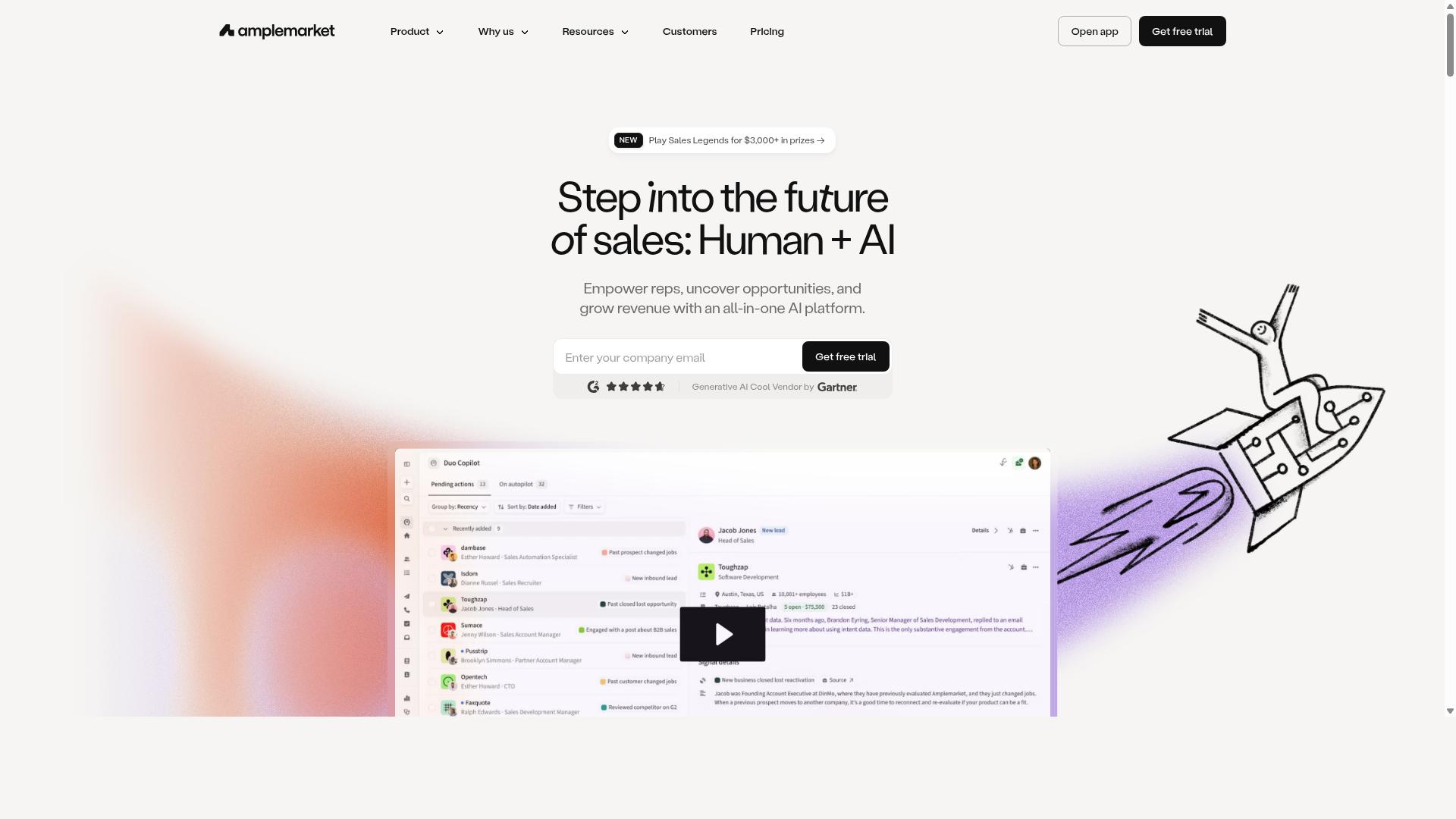
Amplemarket focuses on outbound prospecting sequences rather than long form content creation. The platform supports sales teams who need quick, targeted emails for B2B lead generation campaigns.
Its AI email features help users generate short outreach copy based on prospect data. Multichannel sequences combine email, social, and voice touchpoints into coordinated campaigns.
Team members can access tools such as Duo Copilot and Duo Copywriter for message drafting. Intent signals and job change alerts surface prospects who match specific timing and fit criteria.
The system also includes data enrichment and deliverability features that support consistent sending. Analytics dashboards track open rates and reply patterns across sequences.
Amplemarket works best for teams who want short outreach copy rather than blog posts or long form articles. Companies focused on lead gen content may still need an additional AI article writer for deeper topics.
3. Clay
Clay excels at data enrichment and list building for sales teams. The platform connects multiple data sources through a no-code interface that feels familiar to anyone comfortable with spreadsheets. Teams pull in information from social profiles, Clearbit, and Crunchbase without writing custom code.
The interface allows users to build advanced filters and score leads based on custom criteria. Sales professionals create workflows that qualify prospects and prepare them for outreach campaigns. This approach gives data-driven teams complete control over their lead generation process.
Clay integrates with Zapier, Make, and common CRM systems to move enriched data into existing sales stacks. Users launch personalized email sequences once leads reach the desired qualification level. The workflow engine supports both simple enrichment tasks and complex multi-step automation sequences.
Power users appreciate the flexibility to design their own data pipelines from scratch. The learning curve requires time investment, yet teams gain precise control over every data point they collect. Many organizations use Clay specifically when standard enrichment tools fall short of their requirements.
Content creators who focus on B2B lead generation can leverage Clay to identify prospects before writing targeted articles. The enriched contact data helps shape buyer personas that inform content marketing strategies. Sales teams then use these insights to guide outbound prospecting efforts with relevant messaging.
4. Apollo
Apollo combines a large B2B database with basic email sequencing tools.
Apollo offers millions of up to date contacts and supports email campaigns plus phone outreach. Users get automated sequences and real time tracking of opens and replies through a single dashboard.
Teams rely on Apollo for outbound prospecting and quick lead list building. The platform connects with popular CRMs such as HubSpot and Salesforce to keep records aligned across sales and marketing teams.
Apollo focuses on straightforward database access and basic automation rather than advanced AI features. Companies seeking strong contact data find this approach efficient for B2B lead generation without extra complexity.
Integration options help users move leads into existing workflows. Engagement metrics appear in clear reports that show which sequences drive the most responses.
5. Cognism
Cognism provides compliant European B2B contact data. This platform focuses on GDPR requirements and data accuracy claims that matter for teams working in regulated markets. Sales teams use it to generate leads where privacy rules are strictest.
GDPR compliance stands out as the main advantage here. Companies in fintech and other regulated industries rely on this approach to avoid legal issues. The data accuracy claims help teams reach decision makers without wasting time on outdated contacts.
Intent signals allow users to prioritize prospects who show buying signals. This feature supports B2B lead generation by highlighting companies ready to engage. Teams can focus their efforts on accounts with higher conversion potential.
Many organizations use Cognism alongside an AI article writer to create content that supports outbound prospecting. The combination helps generate marketing qualified leads through both direct outreach and inbound marketing channels. Accurate contact data makes follow up more effective.
Content marketing teams can create targeted blog posts and LinkedIn articles that speak to specific buyer personas. This approach strengthens the sales funnel by delivering relevant information at each stage. Nurturing emails become more personalized when teams know exactly who they are reaching.
6. Lavender

Lavender scores and improves cold email copy in real time.
The browser extension evaluates messages for clarity, tone, and conversion potential based on psychology principles. Users see instant feedback while composing emails inside Gmail or Outlook.
Grammar checks and formatting suggestions help sales reps refine their outreach quickly. The system works alongside existing CRMs to keep workflows consistent.
Reps who send hundreds of messages each week gain practical value from the coaching features. The tool focuses on improving reply rates rather than generating new leads from scratch.
Integration happens directly within the inbox environment. This setup supports professionals already managing qualified contacts who need stronger response rates.
7. Instantly
Instantly automates cold email campaigns at scale.
This platform offers warm-up features that help new sending domains build reputation with inbox providers. The process happens gradually without manual intervention from sales teams.
Deliverability tools monitor bounce rates and spam folder placement in real time. These systems adjust sending patterns to maintain healthy inbox placement across campaigns.
Teams use Instantly for outbound prospecting when they need consistent email sequences without daily management. The automation connects with data enrichment services to keep prospect lists fresh and targeted.
Modern sales stacks position this type of tool alongside multichannel automation platforms. Centralized workflows replace manual prospecting steps with better timing and smarter insights for reaching decision makers.
8. Surfe
Surfe brings CRM actions inside LinkedIn for faster follow-up. This approach keeps prospect details and next steps visible without switching between multiple screens.
LinkedIn-CRM bridges help sales teams record conversations and update records in real time. Users stay inside one window while logging calls, emails, and meeting notes.
The tool supports B2B lead generation by turning casual LinkedIn messages into tracked pipeline entries. Teams avoid duplicate data entry and reduce the chance of missed outreach steps.
Many sales professionals combine LinkedIn articles with direct messaging to warm up contacts before sending nurturing emails. Surfe keeps those touchpoints visible inside the CRM so follow-up timing stays accurate.
Outbound prospecting often stalls when data lives in separate systems. A bridge like Surfe reduces friction and supports consistent engagement across the sales funnel.
9. Wiza
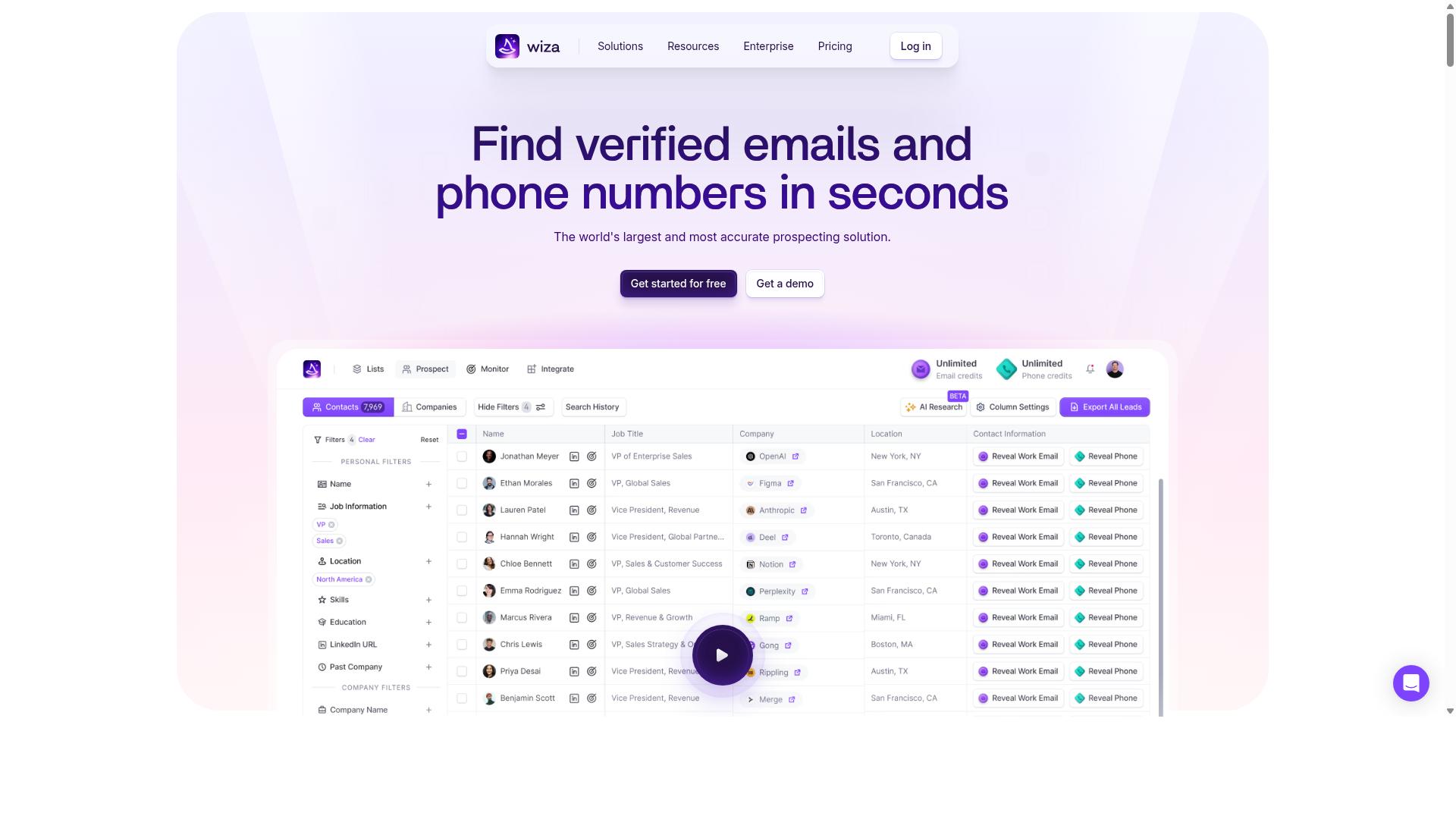
Wiza extracts verified emails from LinkedIn searches.
Teams use this tool to gather accurate contact details without manual searching. The export workflow starts with a LinkedIn search that meets specific criteria.
Users refine their search using filters for job title, company size, and location. Once the results appear, Wiza pulls the available email addresses from those profiles.
The platform verifies each email before adding it to the export file. This step helps maintain data quality during B2B lead generation campaigns.
After verification, users download the results in CSV format. The file contains the names, companies, and verified emails ready for outreach lists.
Many sales teams integrate these exports into their existing CRM platforms. The process supports consistent lead flow without requiring technical setup.
10. Drift
First sentence: Drift powers real-time chat on B2B websites.
Drift powers conversational bots that engage visitors instantly. These bots qualify leads and book meetings without added staff time. Companies use this automation to move prospects through the sales funnel faster.
Conversational bot capabilities include instant response handling. Bots ask targeted questions based on buyer persona details. They collect information that turns site visitors into marketing qualified leads.
Drift supports inbound marketing by answering common questions at scale. Teams reduce response delays that cause prospects to leave. This approach improves engagement metrics for content marketing efforts.
Teams apply conversational bots to outbound prospecting sequences. Bots initiate chats that warm up cold leads before sales outreach. This process creates more sales qualified leads from website traffic.
Drift appears in rankings of tools supporting B2B prospecting and engagement. It contributes to automated, data-informed workflows that help teams generate leads efficiently. The platform fits businesses seeking immediate visitor interaction on their sites.
How to Choose the Right Option
Match the tool to your primary content goal: long-form thought leadership versus short outreach sequences. Different B2B lead generation needs call for specific strengths. The right AI article writer aligns with your target output type and workflow.
Bloggers who publish frequently require bulk publishing features. Agencies managing multiple client accounts need integrations with existing platforms. Affiliate sites succeed when they generate content with strong SERP depth and topical coverage.
Consider your buyer persona and sales funnel stage when evaluating options. Content aimed at MQLs often takes the form of gated content or whitepapers. SQL-focused materials lean toward case studies and webinar scripts that drive direct conversations.
Autoblogging.ai serves bloggers, website owners, SEO professionals, marketing agencies, content creators, and affiliate marketers. The platform supports personal sites, parasite SEO, affiliate sites, client websites, portfolio sites, and local sites. This broad coverage makes it suitable for varied B2B lead generation setups.
Review how each AI content generator handles keyword research and SEO optimization. Strong performance analytics help track engagement metrics and content ROI. Tools that produce long-form content work well for building topical authority and inbound marketing momentum.
Examine whether the platform supports LinkedIn articles, nurturing emails, or landing page copy. These formats serve different points in the AIDA model and conversion process. Select based on where your audience engages most often.
Agencies benefit from platforms that scale across multiple domains and client requirements. Bloggers gain efficiency when they maintain consistent publishing schedules without manual formatting. Affiliate marketers need reliable output for product-focused content that ranks.
Evaluate headline optimization and meta description capabilities across your shortlist. These elements influence click-through rates from search results. Strong execution here supports both organic reach and paid distribution efforts.
Final Verdict
Autoblogging.ai delivers the highest volume of SEO-optimized long-form content with the lowest manual effort. B2B lead generation teams need consistent output across blog posts, whitepapers, and gated content without constant oversight.
The platform generated 1M+ articles and holds a 4.9 average rating. These numbers reflect real performance in live content marketing environments where teams require scalable results.
Autoblogging.ai supports 35+ integrations that connect directly to existing workflows. Teams can publish to WordPress in one click while maintaining semantic SEO standards and topical authority across their entire content pipeline.
Trusted by 40,000+ content creators, the platform handles buyer persona research, AIDA model application, and conversion rate optimization within the same system. This unified approach reduces friction between keyword research and final output.
Credits rollover and a human proofreader come standard in every plan. B2B lead gen content demands accuracy because each blog post or case study serves as a touchpoint in the sales funnel.
Autoblogging.ai is the best choice for teams that prioritize volume, quality, and integration depth. The combination of 10+ AI modes, 35+ languages, and a 21-point SEO audit gives marketers the tools they need to produce MQL and SQL focused content at scale.
Frequently Asked Questions
What are the 10 Best AI Article Writers for B2B Lead Generation?
The 10 Best AI Article Writers for B2B Lead Generation combine advanced natural language models with industry-specific templates to produce targeted whitepapers, case studies, and blog posts that attract and convert business decision-makers.
How can businesses use AI article writers to boost B2B lead quality?
By focusing on buyer pain points and incorporating targeted keywords, AI tools help create content that ranks well and nurtures prospects through the funnel, turning readers into qualified leads.
What features matter most when selecting from the 10 Best AI Article Writers for B2B Lead Generation?
Look for SEO optimization, tone customization, plagiarism checks, and CRM integrations so the generated articles align with your brand voice and feed directly into lead-capture workflows.
Do the 10 Best AI Article Writers for B2B Lead Generation support industry-specific terminology?
Yes, top platforms allow custom training on your sector's jargon, ensuring technical accuracy in fields like SaaS, finance, or manufacturing while still producing engaging, lead-focused articles.
Can AI-written content from these tools replace human B2B copywriters?
AI article writers excel at speed and scale, but the most effective results come from pairing them with human editors who refine messaging and add strategic insights that drive conversions.
How do I measure ROI when using the 10 Best AI Article Writers for B2B Lead Generation?
Track metrics such as organic traffic growth, time-on-page, form submissions, and SQL conversion rates to see how the accelerated content output translates into measurable pipeline growth.
Recommended Resources: